
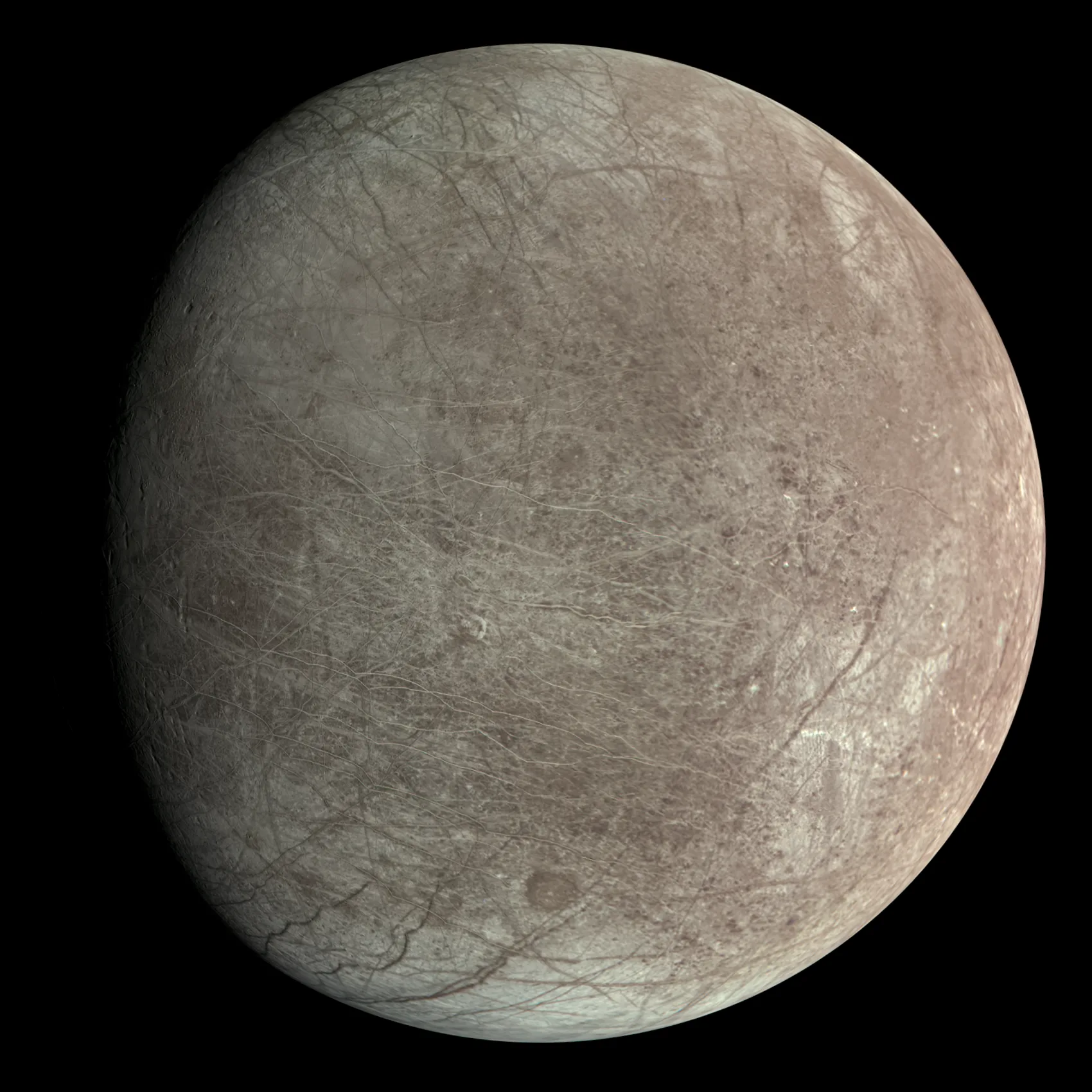
Europa's Hidden Ocean
An icy moon with more liquid water beneath its shell than all of Earth's oceans may hold.
Europa, one of the four large moons of Jupiter discovered in 1610, has one of the smoothest surfaces in the Solar System. Measurements from the Galileo spacecraft showed that Europa disturbs Jupiter's magnetic field in a way best explained by a salty, electrically conducting ocean beneath the ice.
Loading the full dossier…
Connected dossiers
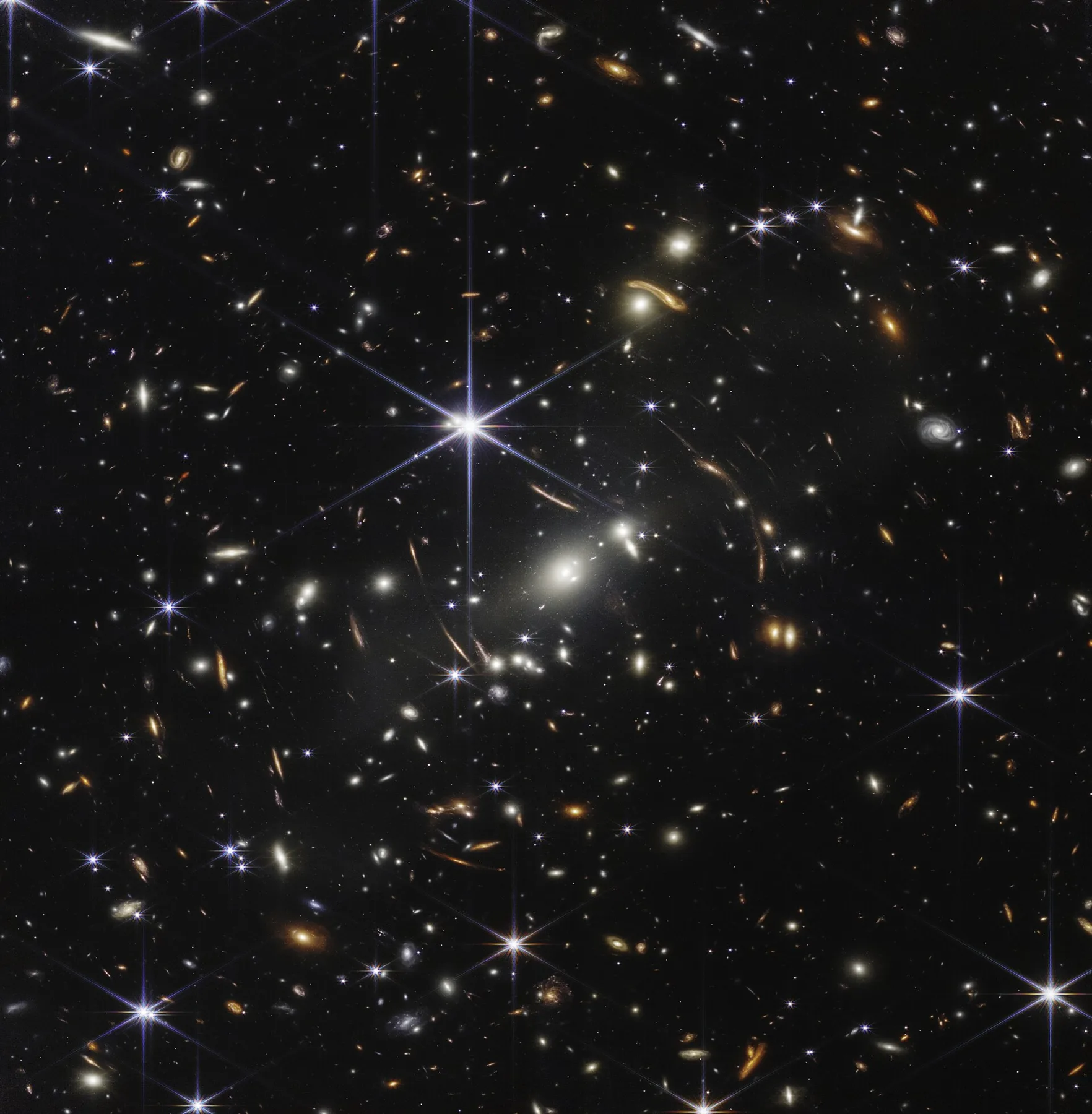 Webb's First Deep FieldSame era · Both are flagship modern space observations.
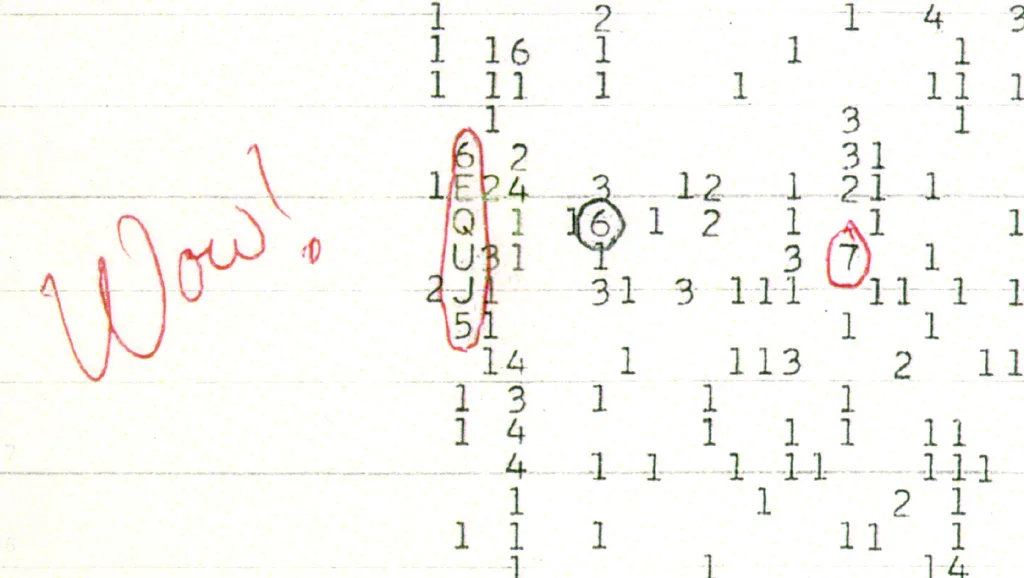 The Wow! SignalSame open question · Both bear on whether life exists beyond Earth.
See Europa's Hidden Ocean in the discovery universe →
Ask the archive
Have a question about this dossier, or think a claim needs a better source? Send it to the editors.
How to read the labels
Hero image: Europa photographed by NASA's Juno spacecraft, 2022. Photo: NASA/JPL-Caltech/SwRI/MSSS/Kevin M. Gill · CC BY 2.0 · via Wikimedia Commons. Evidence labels describe the written claims, not the image. Version 1 · updated 2026-10-22.