
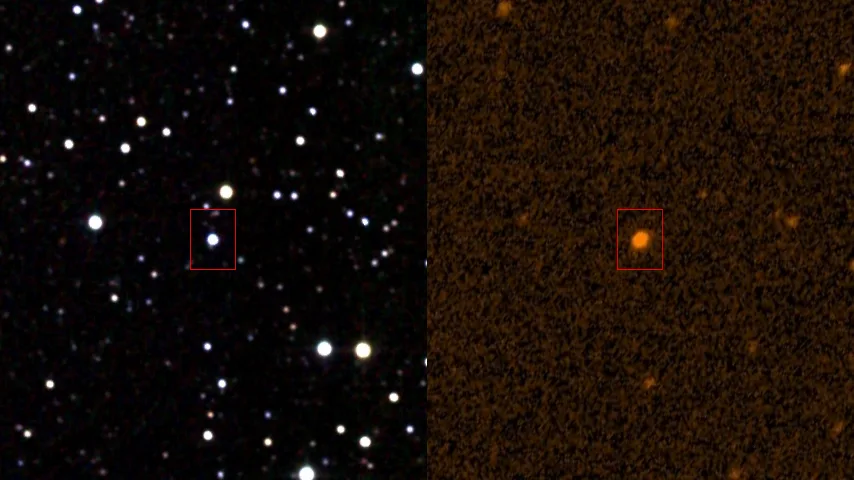
Tabby's Star: The Flickering Puzzle
A star that dimmed by up to 22% at random — once nicknamed the 'alien megastructure' star.
In 2015, volunteers with the Planet Hunters project noticed that a star in the Kepler space telescope's data, KIC 8462852, dimmed in bizarre, irregular ways — at one point by about 22% — unlike any planet transit. The discovery paper, led by Tabetha Boyajian, carried the subtitle 'Where's the flux?'
The strangeness prompted proposals ranging from swarms of comets to an artificial 'megastructure,' and the star was searched for radio and laser signals. Observations of later dips in 2017 showed the dimming was deeper in blue light than in red, which points to fine dust rather than a solid object. What produces that dust, and why it is so uneven, is still debated.
Case log
An open case. Dated developments, oldest first, each with its source.
Why it matters
It shows how a strange signal is narrowed down: test predictions, rule out the exotic, and keep the remaining puzzle honest.
What the evidence says
- Established
Kepler recorded irregular dips in the star's brightness unlike planetary transits.
Basis: Discovery paper in MNRAS (2016).
Sources: 1 - Established
The 2017 dips were wavelength-dependent, consistent with fine dust rather than an opaque object.
Basis: Ground-based monitoring (ApJ Letters, 2018); NASA infrared and ultraviolet study.
- Contested
The star also faded gradually during the Kepler mission.
Basis: Kepler full-frame image analysis (ApJ Letters, 2016).
Counterpoint: Claims of a century-long fade from old photographic plates were disputed.
- Established
A red dwarf companion about 880 AU away was confirmed in 2021.
Basis: Astrometry (ApJ, 2021).
Sources: 6 - Speculative
The dips could be caused by an artificial megastructure.
Basis: Raised as a hypothesis to test (ApJ, 2016).
Counterpoint: The wavelength-dependent dimming argues against an opaque structure.
Sources: 7
Competing interpretations
Uneven circumstellar dust
Clouds of fine dust, perhaps from disrupted comets or bodies, pass in front of the star.
Comet swarm
A family of comets on an eccentric orbit.
Alien megastructure
Engineered structures blocking starlight.
Weigh the evidence
Having read the claims and sources, which explanation do you find most convincing?
One vote per browser. Results appear after you vote.
Open questions
- What creates and replenishes the dust?
- Is there an orbital period to the dips?
Connected dossiers
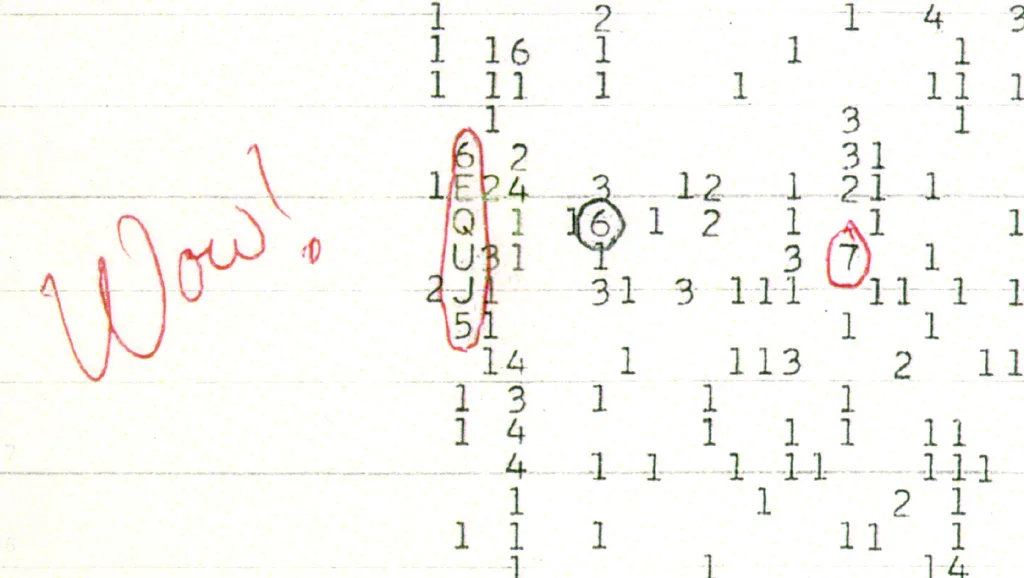 The Wow! SignalSame open question · An 'alien' explanation tested and narrowed.
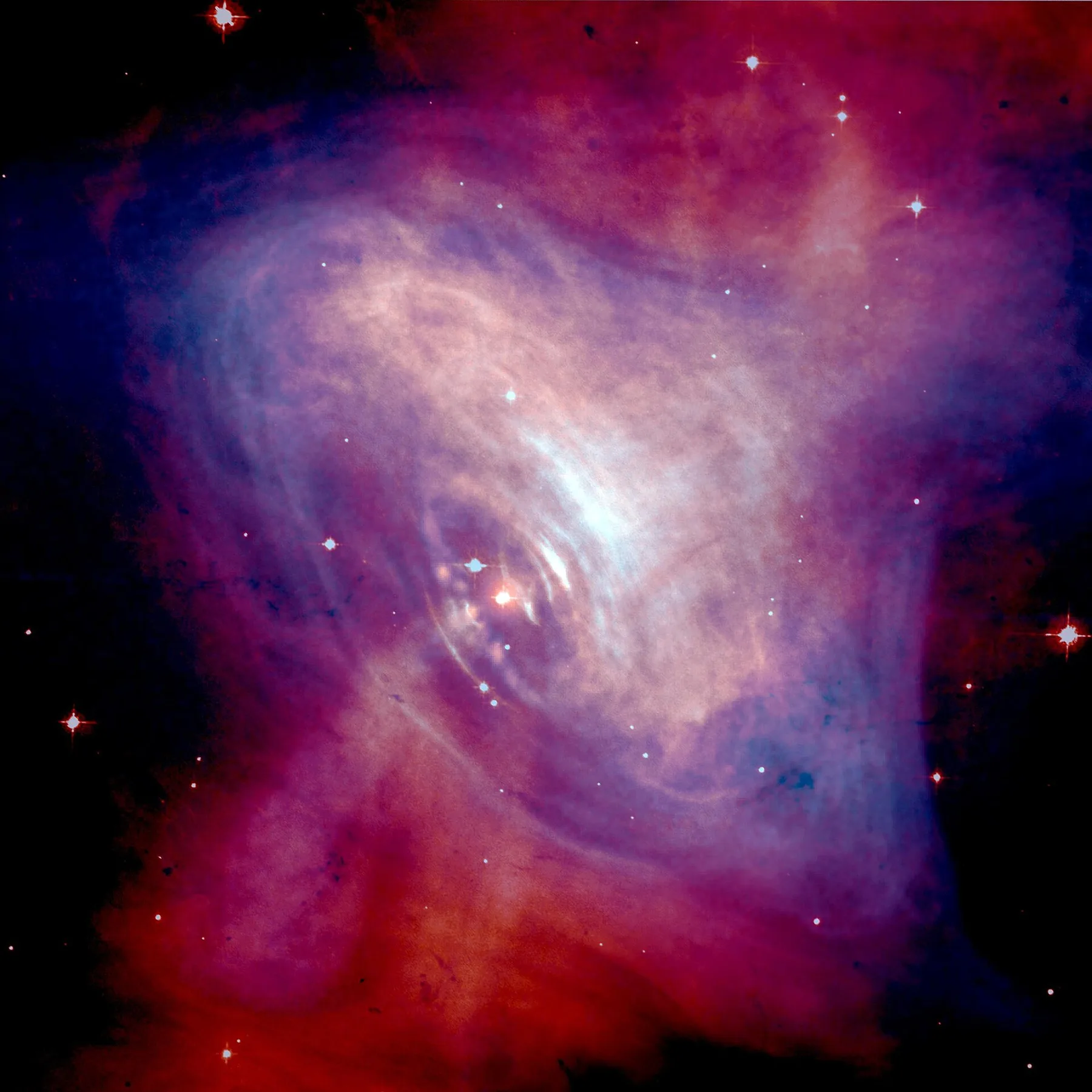 The Discovery of PulsarsContrast · A strange signal later explained by nature.
See Tabby's Star in the discovery universe →
Ask the archive
Have a question about this dossier, or think a claim needs a better source? Send it to the editors.
Sources
- Boyajian, LaCourse, Rappaport et al.. “Planet Hunters IX. KIC 8462852 – where's the flux?.” Monthly Notices of the Royal Astronomical Society (2016) DOI 10.1093/mnras/stw218PEER-REVIEWED · CHECKED 2026-10-22 · CROSSREF DOI METADATA
- Boyajian, Alonso, Ammerman et al.. “The First Post- Kepler Brightness Dips of KIC 8462852.” The Astrophysical Journal Letters (2018) DOI 10.3847/2041-8213/aaa405PEER-REVIEWED · CHECKED 2026-10-22 · CROSSREF DOI METADATA
- Landau, Elizabeth. “Mysterious Dimming of Tabby's Star May Be Caused by Dust.” NASA Jet Propulsion Laboratory (2017) Open source ↗INSTITUTION · CHECKED 2026-10-22 · HTTP 200 LINK CHECK
- Montet, Simon. “KIC 8462852 FADED THROUGHOUT THE KEPLER MISSION.” The Astrophysical Journal Letters (2016) DOI 10.3847/2041-8205/830/2/L39PEER-REVIEWED · CHECKED 2026-10-22 · CROSSREF DOI METADATA
- Hippke, Angerhausen, Lund et al.. “A STATISTICAL ANALYSIS OF THE ACCURACY OF THE DIGITIZED MAGNITUDES OF PHOTOMETRIC PLATES ON THE TIMESCALE OF DECADES WITH AN APPLICATION TO THE CENTURY-LONG LIGHT CURVE OF KIC 8462852.” The Astrophysical Journal (2016) DOI 10.3847/0004-637X/825/1/73PEER-REVIEWED · CHECKED 2026-10-22 · CROSSREF DOI METADATA
- Pearce, Kraus, Dupuy et al.. “Boyajian’s Star B: The Co-moving Companion to KIC 8462852 A.” The Astrophysical Journal (2021) DOI 10.3847/1538-4357/abdd33PEER-REVIEWED · CHECKED 2026-10-22 · CROSSREF DOI METADATA
- Wright, Cartier, Zhao et al.. “THE Ĝ SEARCH FOR EXTRATERRESTRIAL CIVILIZATIONS WITH LARGE ENERGY SUPPLIES. IV. THE SIGNATURES AND INFORMATION CONTENT OF TRANSITING MEGASTRUCTURES.” The Astrophysical Journal (2015) DOI 10.3847/0004-637X/816/1/17PEER-REVIEWED · CHECKED 2026-10-22 · CROSSREF DOI METADATA
- “Strange Star Likely Swarmed by Comets.” NASA Jet Propulsion Laboratory (2015) Open source ↗INSTITUTION · CHECKED 2026-10-22 · ORIGINAL OFFLINE; WAYBACK MACHINE ARCHIVED COPY
How to read the labels
Hero image: Tabby's Star (KIC 8462852) in infrared and ultraviolet survey images. Image: Infrared: IPAC/NASA Ultraviolet: STScI (NASA) · Public domain · via Wikimedia Commons. Evidence labels describe the written claims, not the image. Version 1 · updated 2026-10-22.