
The Hard Problem of Consciousness
Science can map what the brain does. It has not explained why any of that activity feels like something from the inside.
In 1995 the philosopher David Chalmers separated the 'easy problems' of consciousness — explaining how the brain processes information, focuses attention or controls behavior — from the 'hard problem': why physical processes give rise to subjective experience at all, such as the redness of red or the feeling of pain. He argued that explaining brain functions alone may never answer that second question.
Loading the full dossier…
Connected dossiers

See The Hard Problem of Consciousness in the discovery universe →
Ask the archive
Have a question about this dossier, or think a claim needs a better source? Send it to the editors.
How to read the labels
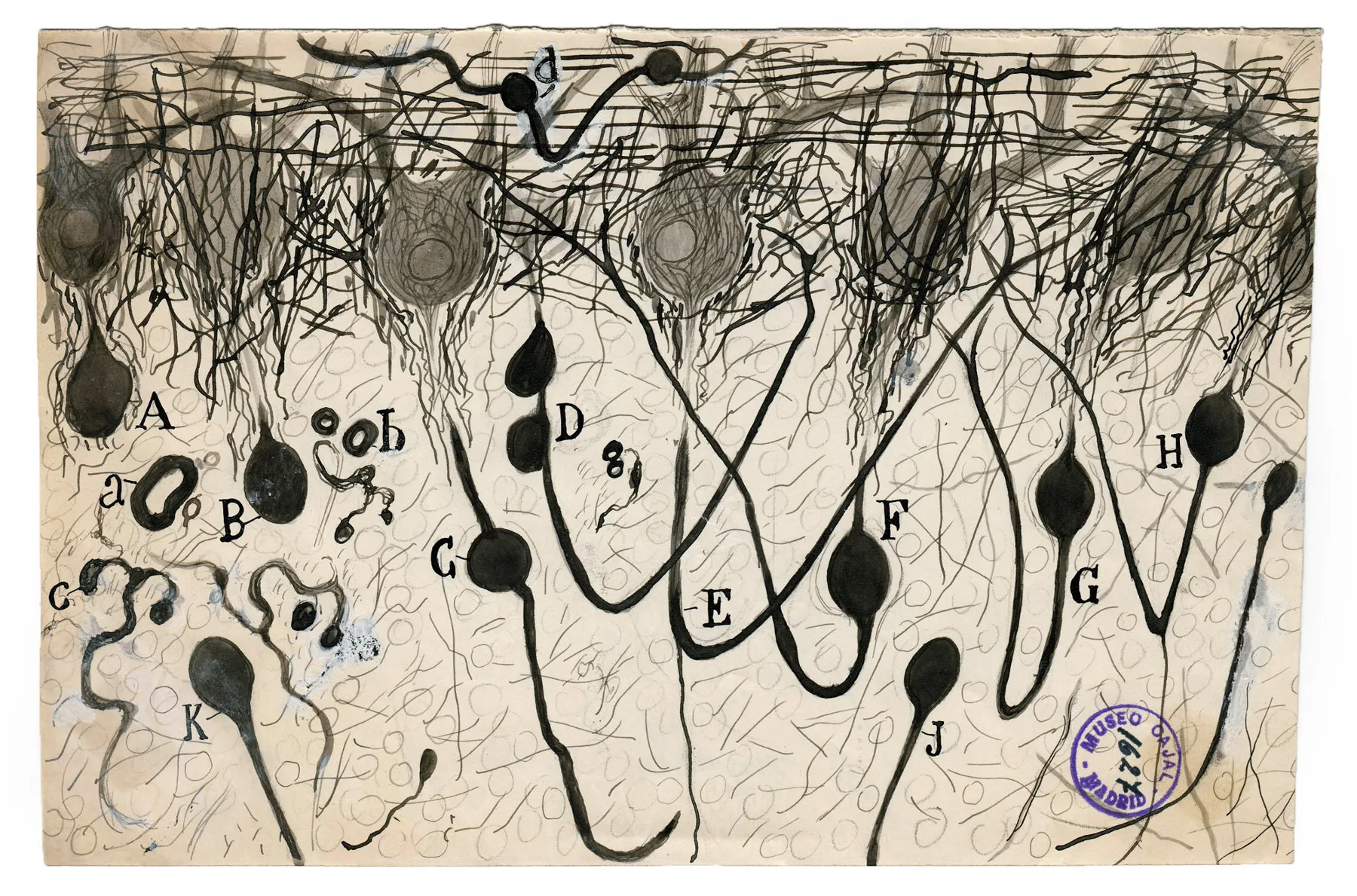
Hero image: Nerve cells of the brain drawn by neuroscientist Santiago Ramón y Cajal. Image: Santiago Ramón y Cajal · Public domain · via Wikimedia Commons. Evidence labels describe the written claims, not the image. Version 1 · updated 2026-10-22.