
Gene Editing: CRISPR and the Edited Babies
A bacterial immune system became a tool to rewrite DNA. Within a decade it cured disease — and was used, illegally, on human embryos.
In 2012 Jennifer Doudna, Emmanuelle Charpentier and colleagues showed that the CRISPR-Cas9 system bacteria use to fight viruses could be programmed to cut DNA at a chosen spot. The method made gene editing faster and cheaper than ever, and the two scientists shared the 2020 Nobel Prize in Chemistry. In December 2023 the U.S. FDA approved Casgevy, the first CRISPR-based therapy, for sickle cell disease.
Loading the full dossier…
Connected dossiers
See Gene Editing in the discovery universe →
Ask the archive
Have a question about this dossier, or think a claim needs a better source? Send it to the editors.
How to read the labels
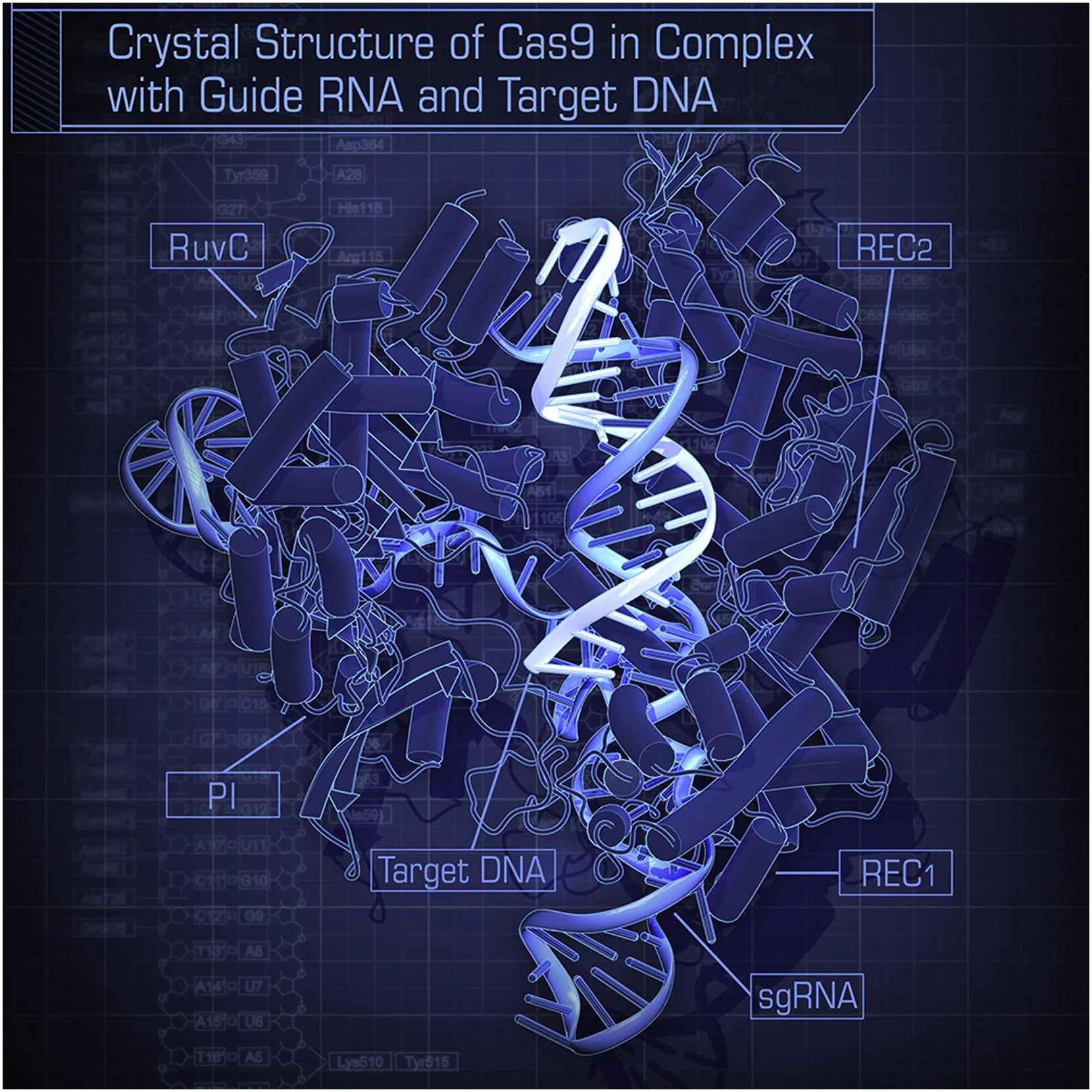
Hero image: Crystal structure of the Cas9 enzyme bound to guide RNA and target DNA. Image: Nishimasu et al., Cell (2014) · CC BY-SA 3.0 · via Wikimedia Commons. Evidence labels describe the written claims, not the image. Version 1 · updated 2026-10-22.